
Star Hopping
Finding Deep-Sky Treasures
Imagine standing beneath a dark night sky. Thousands of stars stretch overhead. Somewhere among them lies a distant galaxy millions of light-years away, a glowing nebula where stars are being born, or an ancient cluster of stars older than our Sun.
The challenge? Finding them. That’s where star hopping comes in. Star hopping is one of the most valuable skills an amateur astronomer can learn. Even in an age of computerized telescopes and smartphone apps, star hopping remains a powerful way to truly learn the night sky.
More than that—it transforms observing from simply looking into exploring.
What Is Star Hopping?
Star hopping is the process of locating a faint celestial object by moving from one easily visible star to another, using recognizable patterns as guideposts. Think of it like hiking to a hidden waterfall. You don’t teleport directly there. Instead, you follow landmarks:
Start at the parking lot
Walk to the big oak tree
Cross the creek
Follow the trail to the waterfall
Star hopping works the same way. You begin with bright stars you can easily identify with your naked eye and “hop” step by step until you reach your target.
These targets might include:
Galaxies
Nebulae
Globular clusters
Open clusters
Planetary nebulae
Double stars
Many of the best deep-sky objects are too dim to see without help—but they can still be found reliably if you know the route.
Why Learn Star Hopping?
Some people ask:
“Why bother? My telescope can find objects automatically.”
That’s a fair question. Modern GoTo telescopes (I have a Celestron NexStar 8SE) can locate thousands of objects at the push of a button. But star hopping teaches something a computer cannot.
It teaches sky literacy.
When you learn star hopping, you begin to understand:
Seasonal constellations
Celestial orientation
Angular distances
Object relationships
How the sky changes through the year
Instead of random stars, the sky becomes familiar territory. You stop feeling lost.
That matters because astronomy becomes far more rewarding when you know where you are.
What You Need to Star Hop
The good new is that you don't need much to read the skies like a pro. You need only four things.
A Sky Chart or App
You're going to need a map.
Good options include:
Printed star atlas
Planisphere
Astronomy apps
Planetarium software
Make sure the chart matches:
Your date
Your time
Your location
The sky changes constantly. A chart from 9 PM may be noticeably wrong by midnight.
A Finder Scope or Red Dot Finder
Your main telescope usually has a narrow field of view. That makes aiming difficult. A finder helps you point accurately.
Common options:
Red dot finder
Optical finder scope
Right-angle finder
Telrad
The wider the field, the easier star hopping becomes.
Low-Power Eyepiece
Start with your lowest magnification. Why?
Because lower power gives:
Wider field of view
Brighter image
Easier navigation
This makes it much easier to see the star patterns needed for hopping. High magnification comes later.
Patience
This matters more than equipment. Beginners often assume they’re failing when they miss a target. They aren’t. Everyone gets lost. Every experienced astronomer has spent time staring into the eyepiece thinking:
“…Wait. This doesn’t look right.”
That’s normal. Keep going.
Understanding Angular Distance
Star hopping requires estimating distances in the sky. Astronomers measure sky distances in degrees.
For reference:
Full Moon = about 0.5°
Three middle fingers at arm’s length = about 5°
Closed fist = about 10°
Spread hand = about 20–25°
This helps you estimate hops.
Example:
“If the nebula is 4° east of this star…”
Now you know roughly how far to move.
This skill improves fast with practice.
Example: Finding Andromeda Galaxy
Let’s do a real example. Target: Andromeda Galaxy (M31)
This is one of the most famous galaxies in the sky. It lies about 2.5 million light-years away. That means the light entering your eye tonight left before humans existed in modern form. Pause and appreciate that.
Now let’s find it.
1. Find Cassiopeia or Pegasus
Look for either the W-shaped constellation Cassiopeia or the Great Square of Pegasus. Both are easy landmarks in autumn.
2. Locate Andromeda
From Pegasus, find the chain of stars belonging to Andromeda.
Look for these guide stars:
Alpheratz
Mirach
Mu Andromedae
3. Hop Upward from Mirach
From Mirach, move upward about one field of view. Then another.
There it is. A faint oval glow.
Not bright. Not dramatic. But unforgettable. You are seeing another galaxy. With your own eyes.
Common Beginner Mistakes
Using Too Much Magnification
This is the most common problem. More zoom is not better for finding objects. Start with the largest aperture eyepiece you have. At least a 25mm. A 40mm is better. You can use a smaller eyepiece (larger magnification) when you have located your target. The larger eyepieces will give you the largest field of view (FOV).
Poor Alignment
If your finder isn’t aligned with your telescope, star hopping becomes frustrating. Before you start observing, align finder and scope on a distant object. A radio tower works well. This is best done in daylight to make finding those distant land objects easier to see.
Observing in Bright Skies
This is not really a mistake. Sometimes people are constrained to their geography. Light pollution hides faint guide stars. In city skies, star hopping becomes harder. It is still possible but harder. Try darker skies whenever possible. Take advantage of vacations where you might be in darker skies to schedule some star gazing. Take your binoculars at least!
Dark Adaptation Matters
Your eyes need time to adjust. Full dark adaptation takes roughly: 20–30 minutes
Avoid:
White flashlights
Phone screens
Car headlights
Use dim red light instead. Even a brief white-light exposure can reduce night vision. That can make faint guide stars disappear. It is tempting to use your phone but you must restrain yourself. Once you get flashed, you may need to wait another 30 minutes to see your target again.
Why Star Hopping Feels Different
There’s something deeply satisfying about manually finding an object. Computers provide efficiency. Star hopping provides discovery.
One feels like searching a database.
The other feels like exploration.
That difference matters. When you finally locate a faint nebula after several hops, the reward feels earned. You remember it. You remember the route.
And next time, the sky feels smaller—more familiar.
The Bigger Lesson
Star hopping teaches more than astronomy. It teaches a mindset. You don’t always need to jump straight to the destination. Sometimes the journey matters.
You learn by moving from one landmark to the next.
One step.
One hop.
One discovery at a time.
That’s true under the stars. And often true in life. The universe rarely reveals its greatest treasures immediately.
Sometimes you have to learn how to find them.
Final Thoughts.
If you’re new to astronomy, don’t be intimidated by star hopping. Start simple.
Choose easy targets:
Andromeda Galaxy
Pleiades
Orion Nebula
Beehive Cluster
Success builds confidence. Soon, the night sky stops being random points of light.
It becomes a map. And every map leads somewhere worth going.
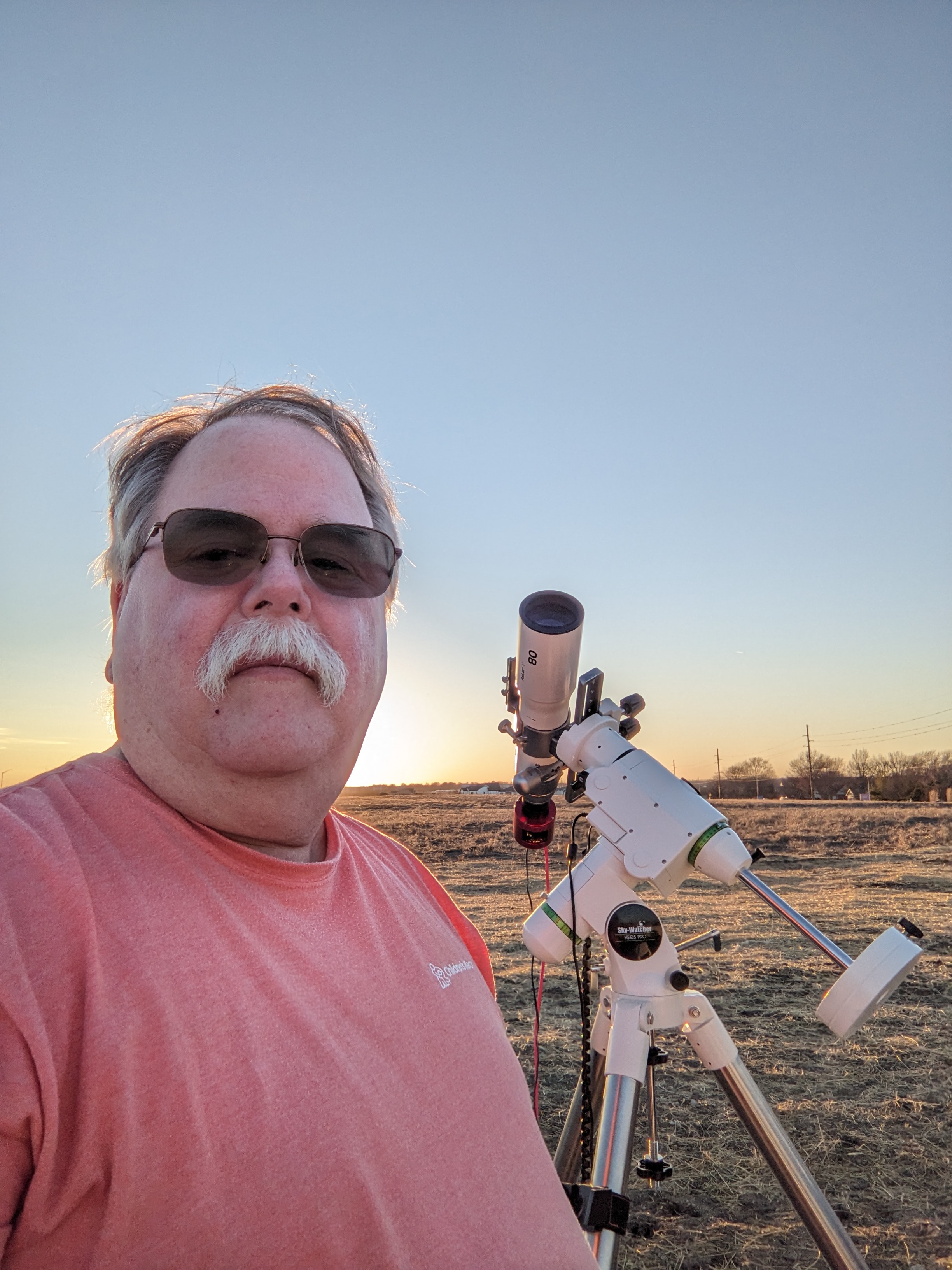
Waiting for the sun to go down...